Electric Lift Tables and Walk-In Tubs Reshape Grooming in 2026
Electric lift tables and walk-in tubs are cutting groomer injuries and no-shows. Here is what owners need to know about equipment, ergonomics, and payback in 2026.
Electric Lift Tables and Walk-In Tubs Reshape Grooming in 2026
The bill for a bad back is coming due across the grooming industry. Musculoskeletal disorders remain the leading reason experienced groomers leave the trade or cut their hours, and in 2026 more shop owners are treating equipment not as a line item but as a retention strategy. Electric lift tables and low-entry walk-in tubs, once considered premium splurges, are now standard specs in new salon buildouts and mobile rigs alike.
The shift is driven by simple math. A groomer who bends, lifts, and twists through 25 dogs a week is loading the spine thousands of times. When that groomer blows out a disc at 38, the owner loses years of trained productivity, a loyal client book, and often the person entirely. Against that loss, the price gap between a hydraulic table and an electric one looks small.
The Injury Problem Owners Keep Underestimating
Grooming is physically punishing work, and the data has been consistent for years. Surveys of professional groomers repeatedly find that the large majority report chronic pain, with the lower back, shoulders, wrists, and neck topping the list. Lifting large dogs onto tables and into tubs is cited as the single worst offender.
The biomechanics are not mysterious. Lifting a 70-pound Labrador from the floor to a fixed 34-inch table asks the groomer to hoist dead weight while bending forward, the exact posture that maximizes spinal compression. Do that a dozen times a day and the cumulative load rivals warehouse work, except groomers rarely get the training or equipment that regulated industrial workplaces require.
Repetitive strain compounds the acute risk. Scissoring at the wrong height forces the shoulders up and forward for hours. Bathing a dog in a tub that sits too low means a bent spine for the entire wash. These are not dramatic single-event injuries. They are slow accumulations that end careers quietly.
The Hidden Cost of a Working Injury
The injuries that hurt a business most are rarely the ones that put a groomer in the hospital. They are the low-grade, chronic ones that never fully heal. A stylist with a nagging shoulder starts turning away the big doodles that pay the most. A bather with wrist pain slows down, drops from twelve dogs a day to eight, and never says why. That silent productivity leak costs an owner far more over a year than a single dramatic event, and it is invisible on any spreadsheet. It shows up only as a book that never quite fills and a good employee who seems tired all the time. Ergonomic equipment is aimed squarely at that slow bleed, not just the emergency.
Electric Versus Hydraulic: What Changed
For years the practical choice was hydraulic. A foot-pump hydraulic table costs less and needs no outlet, which kept it popular in budget-conscious shops and mobile units. The tradeoff is speed and range. Pumping a table up takes repeated foot presses, and the lowering action is often abrupt. Many hydraulic tables also bottom out around 20 to 24 inches, still too high for a large dog to step onto comfortably.
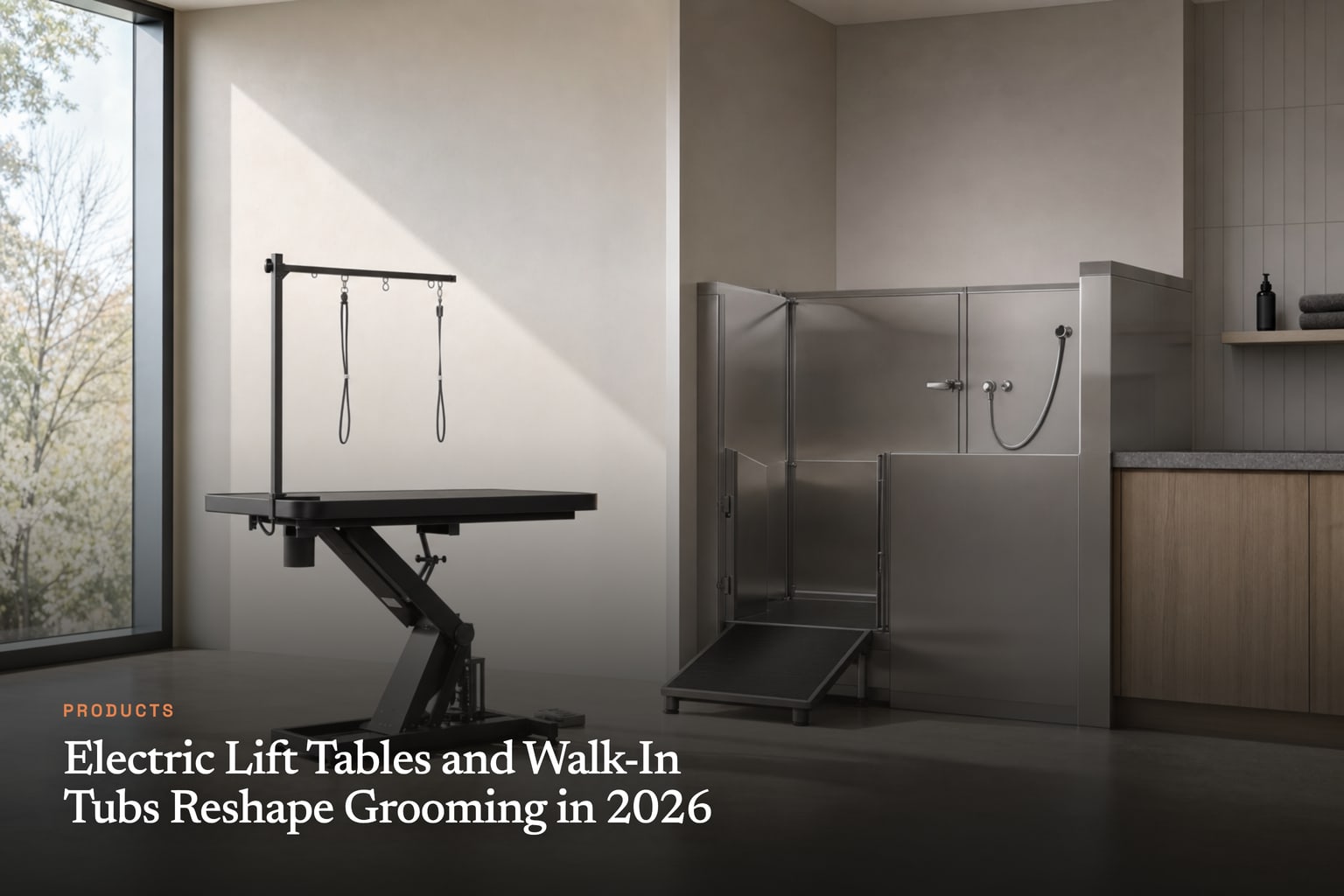
Electric lift tables changed the calculus. A quality electric table drops to roughly 6 to 9 inches off the floor, low enough that most dogs walk on under their own power, then rises smoothly to full working height at the touch of a pedal or hand control. That single feature eliminates the worst lift of the day. Dogs that used to be hauled up now step up.
The knocks against electric tables are real but shrinking. They cost more, typically running several hundred to over a thousand dollars above comparable hydraulics. They need power, which complicates mobile setups, though 12-volt and battery options have improved. And a motor is a part that can fail, whereas a hydraulic cylinder is simpler. For most fixed salons in 2026, the ergonomic gain outweighs those concerns. For mobile groomers, hydraulic still holds a legitimate niche, but even there low-clearance electric models are gaining ground.
What to Look for in an Electric Table
Not all electric tables are equal, and the specs that matter are easy to overlook in a showroom. Check the weight capacity honestly against the biggest dogs you groom, and leave headroom, because a table rated at its limit every day wears faster. Look at the low height, since the whole point is a deck the dog can walk onto, and a table that only drops to 12 inches gives up much of the benefit. Confirm the top speed of the lift, because a slow motor that takes twenty seconds to raise costs you real minutes across a full book. A stable, non-tip base with a wide footprint matters more than groomers expect, especially with a nervous large dog shifting its weight. And check the control placement. A foot pedal frees both hands to steady the dog, which beats a hand control when the animal is moving.
Grooming arm and loop quality deserve a look too. The safest lift table in the world does not help if the restraint system lets a dog slip or lunge. Buy the table and the restraint as one system, not as an afterthought.
Walk-In Tubs and the Bathing Bottleneck
Bathing is where the second big equipment shift is happening. Traditional elevated tubs solved the back problem for the groomer washing a small dog but created a lifting nightmare for large breeds. Walk-in tubs with fold-down or swing-open doors let the dog enter at floor level, then the groomer either bathes at a low-entry station or raises the animal on an integrated lift.
The best current bathing systems combine three things: a low or zero-step entry, an adjustable-height wash platform, and recirculating or high-efficiency plumbing that cuts water use. Some units pair a walk-in door with an electric lift floor, so the dog enters low and rises to a comfortable washing height. That configuration attacks both the lifting injury and the bent-spine bathing posture at once.
Owners evaluating tubs should weigh a few practical factors:
- Door seal quality, since a leaking walk-in door becomes a daily headache
- Non-slip flooring and adequate drainage to protect both dog and groomer
- Water and heating efficiency, which materially affects utility bills at volume
- Footprint, because walk-in units often need more floor space than a wall tub
The Water and Utility Angle
The plumbing conversation gets dismissed as a side detail, but at volume it is a real line on the P&L. A busy shop can run through an enormous amount of hot water in a day, and every bath is heating cold water up to a comfortable temperature. Tubs with efficient sprayers, recirculating pre-wash systems, and good insulation cut both the water bill and the far larger energy cost of heating that water. Over a year of full books, the difference between an efficient bathing station and a wasteful one is not trivial. When you price a tub, ask about flow rates and whether the unit supports a recirculating de-shed or pre-soak cycle, because those features pay you back every single day the shop is open.
The Business Case Beyond Injury Prevention
The ergonomic argument is the headline, but the operational payoff is what closes the sale for many owners. Faster table adjustment and easy dog loading shave minutes off every appointment. Across a full book, that recovered time can mean an extra dog or two per day per station.
Equipment also affects hiring in a tight labor market. Grooming schools are producing fewer new professionals than the industry needs to replace those aging out, and candidates increasingly ask about working conditions. A shop equipped with electric tables and walk-in tubs signals that it takes its people seriously. That reputation matters when a skilled bather or stylist is deciding between two offers.
Then there is the schedule protection. When a groomer strains their back, appointments get canceled, clients get rebooked with strangers, and some never return. A single serious injury can disrupt weeks of revenue. Viewed that way, the premium for better equipment is less a cost than an insurance premium against your own downtime.
Running the Payback Math
Owners who want a number can build a rough one quickly. Suppose an electric table costs $1,200 more than the hydraulic you would otherwise buy. If easier loading and faster adjustment let a stylist add even one extra dog per day at, say, a $60 groom, that is $60 in additional revenue on a normal day. It does not take many weeks of that to close the gap on the price difference, and after that the table is generating margin rather than costing it. That math ignores the injury and retention value entirely, which is the larger prize. Frame the purchase as a productivity investment with an injury-prevention bonus, and the decision usually makes itself.
The same logic applies to bathing. A walk-in tub that lets one bather comfortably handle the large breeds that used to require two people, or that used to get declined outright, expands the services you can sell without adding payroll. Capacity you can actually staff is worth real money.
Where the Old Gear Still Fits
None of this makes the top-tier gear right for every shop. A part-time home groomer handling small breeds may be perfectly served by a solid hydraulic table, and there is no shame in that. A mobile operator wrestling with limited power and tight space has legitimate reasons to keep a well-built hydraulic unit. The point is not that hydraulic is obsolete. It is that the default has shifted. Ten years ago electric was the exception you justified. In 2026 it is closer to the baseline, and hydraulic is the choice you make for a specific reason.
For any owner running volume, employing staff, or planning to stay in the trade past 45, the equipment conversation has moved. The question is no longer whether ergonomic equipment pays for itself. It is how quickly, and whether you can afford the slow, invisible cost of going without it.