Fear Free Grooming Techniques That Cut Bites and Stress
Practical low-stress and Fear Free handling methods for anxious, senior, and reactive dogs that reduce bites, protect the animal, and keep groomers safe.
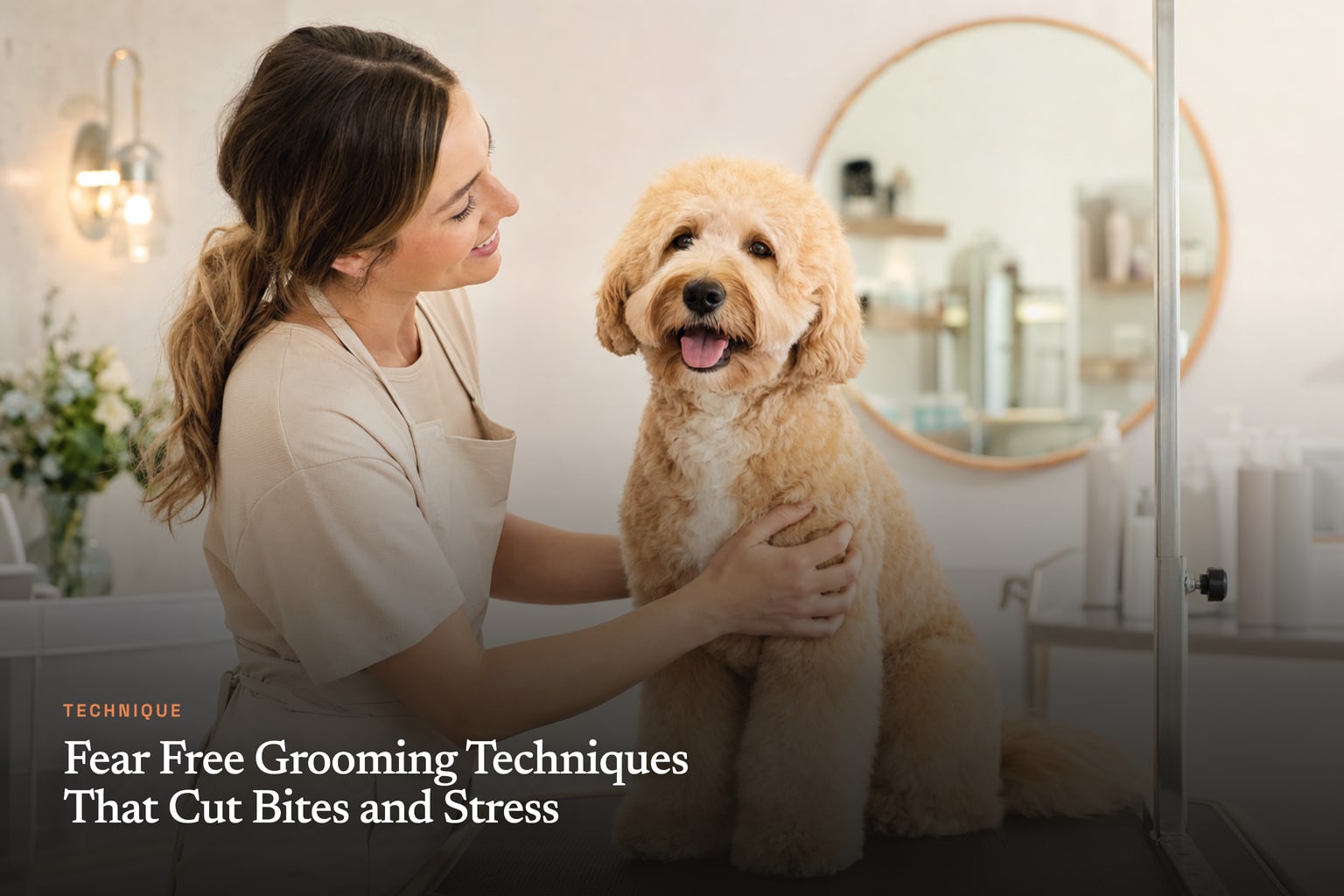
The Grooming Table Is Where Fear Free Wins or Loses
More than 8,000 grooming professionals now hold Fear Free certification, and the number keeps climbing. That growth tells you something the injury statistics have said for years. The table is the most dangerous three feet in the salon, and the old playbook of muscling a scared dog through a bath is finished.
Fear Free, founded by veterinarian Marty Becker in 2016, opened its groomer certification track and has spent the last several years pushing a simple argument into an industry built on speed. A frightened dog is a biting dog. A biting dog costs you time, insurance premiums, staff, and sometimes the client. The International Association of Animal Behavior Consultants and the low-stress handling movement pioneered by the late Dr. Sophia Yin arrived at the same conclusion from the veterinary side. Reduce the fear and the fight goes with it.
None of this is soft. It is risk management with a leash on it.
Read the Dog Before You Touch It
Most bites are not ambushes. They are the last line in a paragraph the dog has been writing since it walked in the door. Groomers who get hurt usually missed the earlier sentences.
Watch for the escalation ladder. Lip licking, yawning when the dog is not tired, a head that turns away, a whale eye where you see the white crescent of the sclera. These are appeasement and avoidance signals. They mean the dog is asking for space. If you push past them you move the animal toward a growl, a snap, and finally a committed bite.
The practical rule is to change what you are doing the moment you see the low-level signals, not after the growl. A growl is not the problem. A growl is information, and a dog that has been punished for growling is a dog that has learned to skip straight to teeth. Never correct a warning.
Build a two-minute intake habit. Note the dog's body on arrival, ask the owner about past grooming and vet visits, and flag reactivity in the record so the next groomer inherits the knowledge instead of the wound.
The Body Language Most Groomers Overlook
The obvious signals get attention. The subtle ones do the early warning. A dog that suddenly goes still, holding its breath with a closed mouth after it had been panting, is often about to escalate, not settle. Stillness reads as calm to a busy groomer and it is frequently the opposite. Watch the commissure of the mouth too. A long lip line pulled back at the corners signals fear, while a short, forward lip with a wrinkled muzzle signals offense. They call for different responses, and confusing them gets people bitten.
Displacement behaviors are another tell. A dog that starts scratching, sniffing the table, or shaking off as though wet when it is dry is trying to discharge stress. Those are moments to pause, not to push through. The groomers who read these signals treat the whole session as a conversation where the dog gets a vote, and dogs that get a vote fight far less often.
Techniques That Lower the Temperature
The goal on the table is to keep the dog under threshold, meaning below the point where it stops learning and starts reacting. Several handling choices do the heavy lifting.
- Go slow on the approach. Let the dog see and sniff the clippers or dryer before they touch. Introduce sound and vibration at a distance first.
- Use food strategically. A steady stream of high-value treats, or a lick mat smeared with peanut butter or spray cheese stuck to the tub wall, redirects a nervous dog and builds a positive association with the bath.
- Turn the dryer down or off. High-velocity dryers are a top fear trigger. Lower speeds, a quieter unit, or towel and cage drying for sensitive dogs prevents a meltdown you will pay for at nail time.
- Groom in the position the dog offers. Fighting a dog onto its back to do the sanitary trim invites a bite. Work standing where you can.
- Take breaks. A 30 second pause when a dog tenses often prevents a full shutdown and lets you finish the groom at all.
Non-slip footing matters more than most owners realize. A rubber mat on the table and in the tub removes the scrambling panic that comes from a dog feeling it might fall. Stability is calm.
Desensitization Is a Program, Not a Moment
The most powerful tool is the one that happens across visits rather than within one. Counter-conditioning pairs a scary thing with a good thing until the dog's emotional response flips. The clipper turns on at a distance, the dog gets chicken, the clipper turns off, the chicken stops. Repeat until the sound of the clipper makes the dog look for the treat. This is the same mechanism Dr. Yin's work formalized, and it is the backbone of the Fear Free approach.
The catch is that it requires the salon to sometimes do less than a full groom. A first appointment for a badly frightened dog may be a happy visit: the dog comes in, gets treats, meets the tub, and goes home unbathed. Salons that build a short desensitization visit into the menu, even at a reduced rate, often convert a lifelong problem dog into a manageable regular. The alternative, forcing a full groom on a terrified animal, teaches the dog that the salon is a place where bad things happen, and every future visit gets harder.
Restraint Without a Fight
Fear Free does not mean no restraint. It means the least restraint that keeps everyone safe, applied without escalation. Gentle control lowers arousal. Forceful pinning raises it.
Grooming loops keep a dog on the table, but a dog that thrashes against a loop can injure its neck or trachea. Use a figure-eight or a second loop under the front legs to distribute pressure, and never leave a looped dog unattended for a second. A dog can hang itself off a table in the time it takes to answer the phone.
Muzzles deserve a clear-eyed take. A basket muzzle used correctly protects you and the dog, and it is far kinder than a groomer's hand clamped over a snapping mouth. The mistake is slapping one on cold. Introduce it with treats fed through the basket over several sessions when time allows, and for a first-time reactive dog, condition it briefly before the groom rather than ambushing the dog with it.
Know your ceiling. Some dogs need pre-visit anti-anxiety medication prescribed by a veterinarian, and some need sedated grooming at a clinic. Referring out a dog you cannot safely handle is professional judgment, not failure. Document it and tell the owner plainly.
Working With Veterinarians on Pre-Visit Medication
The pre-visit pharmaceutical conversation has matured. Products like trazodone and gabapentin, and situational combinations a veterinarian may prescribe, can take a dog from unhandleable to workable without full sedation. The groomer's role is not to recommend a drug or a dose. It is to describe the behavior accurately to the owner and suggest they talk to their vet before the next appointment, then note in the record what was tried and how the dog responded. A dog that had one calm groom on a vet-prescribed protocol is a dog worth keeping detailed notes on, because that protocol becomes the plan for every future visit.
Seniors and the Long Game
Older dogs bring their own math. Arthritis, failing vision, hearing loss, and cognitive decline turn routine handling into pain that the dog can only answer with its mouth. A senior that snaps at the nail grinder may be telling you its hips scream when you lift a leg.
Shorten the session. Split a full groom across two visits if the dog fatigues. Support the joints, avoid holding limbs at extreme angles, and let an old dog rest between stages. Pad the table. A folded towel under a bony frame is a small courtesy that changes behavior.
A senior with hearing loss is startled by touch it did not see coming, so approach from the front and let the dog feel a hand before you begin work behind it. A dog with clouded vision leans on scent and routine, so keeping the same groomer and the same station across visits reduces the confusion that reads as fear. These accommodations cost minutes, not money, and they are the difference between an old dog that tolerates grooming and one that dreads it.
For anxious and reactive dogs of any age, the appointment structure itself is a tool. First and last slots of the day mean fewer barking dogs, less lobby chaos, and a quieter room. Some salons now book express or solo appointments for reactive clients at a premium, which serves the dog and the balance sheet at once.
The Record Is a Safety Tool
The single cheapest bite-prevention measure is a good client record. A flag that says this dog needs a basket muzzle, works best in the first slot, cannot lie on its side, and gets treats through the whole nail trim is institutional memory that survives staff turnover. Client-management platforms such as Talopet let salons attach behavior and handling notes to a pet's profile so the flag surfaces the moment the appointment is booked, not after a new groomer has already been bitten. The salon that treats those notes as required reading is the salon whose injury log stays short.
The business case has caught up with the ethics. Fewer bites mean lower workers' comp exposure and fewer lost days. Calmer dogs mean owners who return and refer. The salons treating low-stress handling as a standard, not a specialty, are the ones the anxious-dog market is already walking toward.