Hand-Stripping Wire Coats: The Skill Gap Costing Groomers
Why clipping ruins terrier and schnauzer coats, when hand-stripping matters, the trade's widening skill gap, and how to price the service to profit.
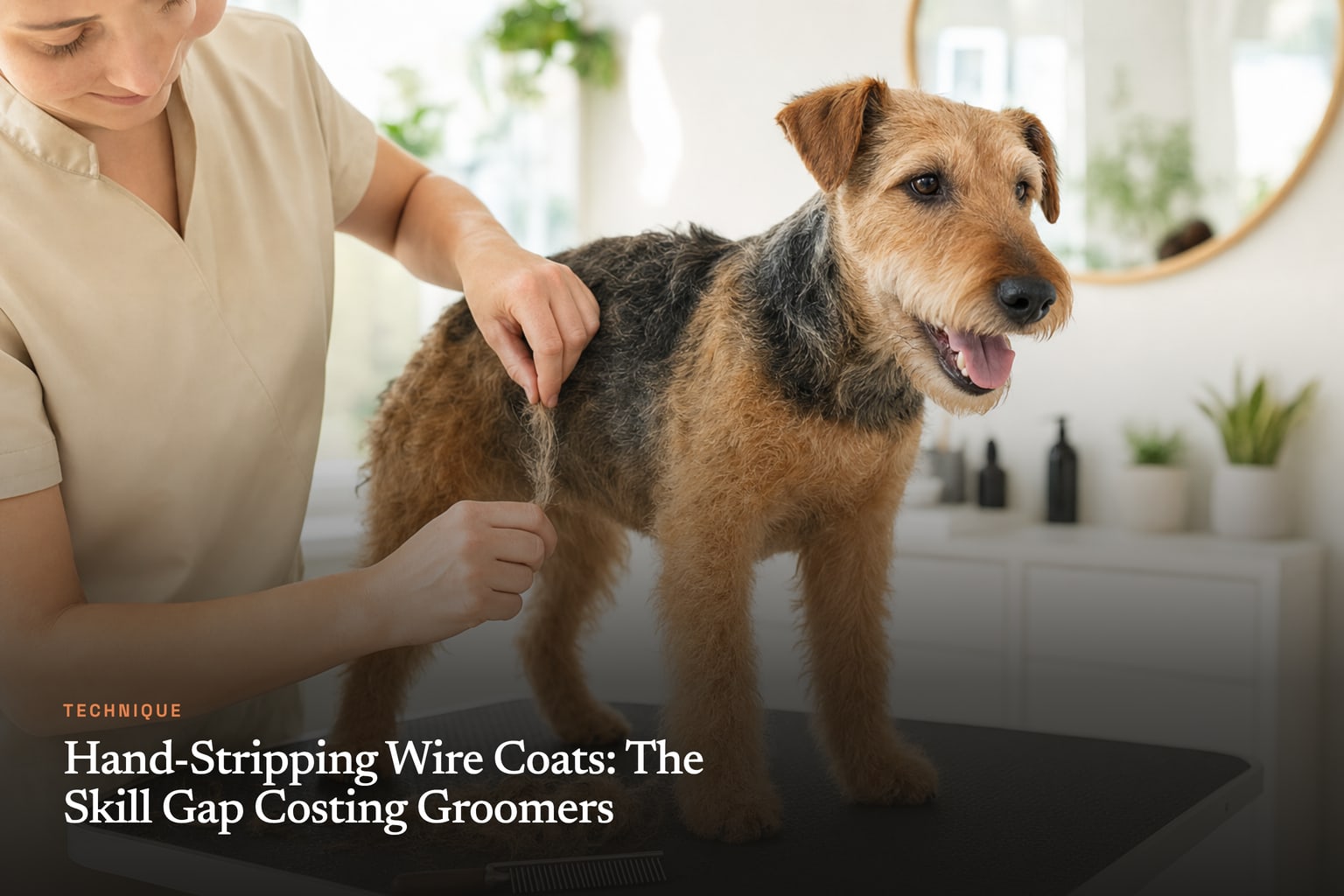
Hand-Stripping Wire Coats: The Skill Gap Costing Groomers Money
Ask ten grooming shops in a mid-sized market whether they hand-strip, and you will be lucky if two say yes. That scarcity is not an accident. It reflects a training gap that has been widening for a decade, and it is quietly reshaping which salons get to charge premium rates for terrier and schnauzer work.
Hand-stripping is the manual removal of dead outer coat by pulling it from the follicle, either with finger and thumb or a stripping knife used as a grip rather than a blade. It is slow, physical, and hard to learn. It is also the only method that preserves the coat a wire-coated breed was built to have. As more groomers reach for clippers by default, owners of Airedales, wire fox terriers, border terriers, cairns, and miniature schnauzers are finding fewer professionals who can do the job the breed standard assumes.
Why Clipping Degrades a Wire Coat
A wire coat has two components: a harsh, weather-resistant outer guard hair and a soft insulating undercoat. The texture and color of that guard hair are tied to the growth cycle. When the hair is mature and ready to shed, it releases cleanly from the follicle. Hand-stripping removes it at that stage and lets a fresh, correctly textured hair grow in.
Clippers cut across the shaft instead of removing the whole hair. The follicle keeps the old root, and over repeated grooms the soft undercoat comes to dominate. The practical result is familiar to anyone who has seen a clipped schnauzer years into the habit. The jacket goes soft and cottony. The rich black or salt-and-pepper fades toward a dull gray or pale fawn. The coat holds dirt and moisture instead of shedding it, and skin problems become more common because the protective outer layer is gone.
None of this is cosmetic pedantry. Kennel club breed standards, including those maintained by the American Kennel Club and The Kennel Club in the UK, describe these coats in terms of harsh texture and specific color that only proper coat management maintains. A clipped wire dog is not being groomed to standard. It is being managed for convenience, and the coat pays for it permanently in some lines, since heavily clipped coats rarely recover full texture.
The Growth Cycle a Stripper Has to Read
Doing this well means understanding the coat's calendar. A wire coat grows in phases, and the dog is ready to strip when the longest guard hairs have reached their full length and loosened at the root, a state groomers call being blown or ready to come. Pull too early and you are yanking live, anchored hair, which hurts and does not release cleanly. Pull at the right moment and the dead hair slides free with light tension and the dog barely notices.
Reading that window is the skill that separates a competent stripper from someone who owns a stripping knife. It is why the technique cannot really be taught from a video. A groomer has to put hands on hundreds of coats in different phases to feel the difference between hair that is ready and hair that is not. That tactile learning curve, more than the physical effort, is what keeps the supply of skilled strippers thin.
When Hand-Stripping Actually Matters
The honest position is that not every wire dog needs stripping, and pretending otherwise costs you client trust. The service matters most in three situations.
- Show and breeding dogs, where coat texture and color are judged and non-negotiable.
- Pet dogs whose owners want the breed to look and function as intended, and who accept the maintenance rhythm that requires.
- Dogs with skin or coat-quality issues that trace back to years of clipping, where a rolling strip can partly restore condition.
For the aging pet with a soft coat already, or the owner who genuinely prefers a low-maintenance clip and understands the tradeoff, clipping is a legitimate choice. The professional move is to explain the difference in plain terms and let the owner decide, rather than defaulting to clippers because it is faster or defaulting to strip because it earns more.
Rolling the Coat Versus Stripping It Out
There are two working methods, and clients rarely know the difference until a groomer explains it. Stripping a coat out means taking the entire dead coat off at once, which resets the dog to a short jacket and starts a new cycle. Rolling the coat means removing only the longest, most mature hair on a regular schedule so the jacket always contains hair at several stages of growth. Rolling keeps a dog in presentable, correctly textured coat year round, which is why show handlers live by it.
For a pet owner, the choice shapes the maintenance rhythm and the price. A rolled coat needs the dog in every four to six weeks but each visit is shorter. A strip-out means fewer visits but a longer, dramatic session each time and a period where the dog looks bare. Explaining this tradeoff up front is part of selling the service honestly.
The Skill Gap Is Real, and It Is Structural
Hand-stripping is barely covered in most entry-level grooming programs. State licensing where it exists rarely touches it. The technique takes months to learn on live dogs and years to do at speed, and it is physically taxing on the hands, wrists, and back. That combination pushes new groomers away from it.
Industry groups have tried to hold the line. The National Dog Groomers Association of America has long offered breed workshops and certification that include hand-stripping, and terrier and schnauzer clubs run grooming seminars for members. But the supply of trained strippers is not keeping pace with the number of wire-coated pets, especially as breeds like the miniature schnauzer stay perennially popular in registration figures.
The upside for those who invest: scarcity is pricing power. A groomer who can strip well in a market where almost no one else can is not competing on price. They are the only option, and word travels fast among terrier and schnauzer owners, who are among the most breed-loyal clients in the business.
Protecting the Body That Does the Work
The physical toll deserves more attention than it gets, because a stripper who wrecks their hands has no career. Repetitive pulling loads the thumb, wrist, and forearm, and years of it can bring on tendon problems that end the work early. The groomers who last treat their bodies as equipment. They vary grip between finger-and-thumb and knife, keep stripping stones and quality knives sharp so the coat does the releasing rather than brute force, stretch between dogs, and cap the number of long strips they book in a single day. Learning the technique is step one. Learning to do it for twenty years without an injury is the part nobody advertises.
Pricing It So the Service Is Worth Offering
The single most common mistake is pricing a strip like a fancy clip. It is not. A full strip on a coated Airedale can run two to four hours. Time it once, honestly, before you set a number.
A few principles keep the service profitable rather than a charity project:
- Charge by time, not by a flat breed rate. Hand-stripping labor varies enormously with coat condition. Build a base plus an hourly or per-half-hour rate for the actual work.
- Sell the rolling coat, not the one-off. A dog on a maintenance schedule, stripped in sections every four to eight weeks, is faster to work, better for the coat, and gives you predictable recurring revenue. Price a maintenance program that rewards the owner for staying on schedule.
- Price the first strip as the hardest one. A neglected or clipped-out coat is the slowest job you will ever do on that dog. Charge accordingly and set expectations that later visits cost less.
- Do not discount to compete with clip prices. You are selling a different product. Owners who want a strip already know they cannot get it cheaply.
The math tends to surprise groomers who finally track it. A stripping specialist billing for real hours often out-earns a high-volume clip operation per chair, with fewer dogs, less marketing spend, and a client base that does not shop around.
Making the Recurring Model Stick
The rolling coat only works as a business model if the dog actually comes back on schedule, and that is a booking problem as much as a grooming one. The salons that make it profitable lock in the next appointment before the dog leaves and track each dog's coat cycle so they can prompt the owner at the right interval. Scheduling and client-management software such as Talopet makes this straightforward by storing coat notes and automating rebooking reminders, which turns an every-so-often strip into the predictable four-to-eight-week rhythm the coat needs and the shop can plan around. A specialist with a booked-out rolling schedule is running the most efficient version of this service, because the coats stay easy and the calendar stays full.
The technique is old, the demand is steady, and the competition is thin. For a shop willing to put in the training hours, hand-stripping is one of the few genuinely defensible niches left in the trade.