Why Salons Are Adding Cat Grooming Services in 2026
More grooming salons are adding feline services in 2026. A look at safe handling, lion cuts, sanitary trims, and the CFMG certification path for owners.
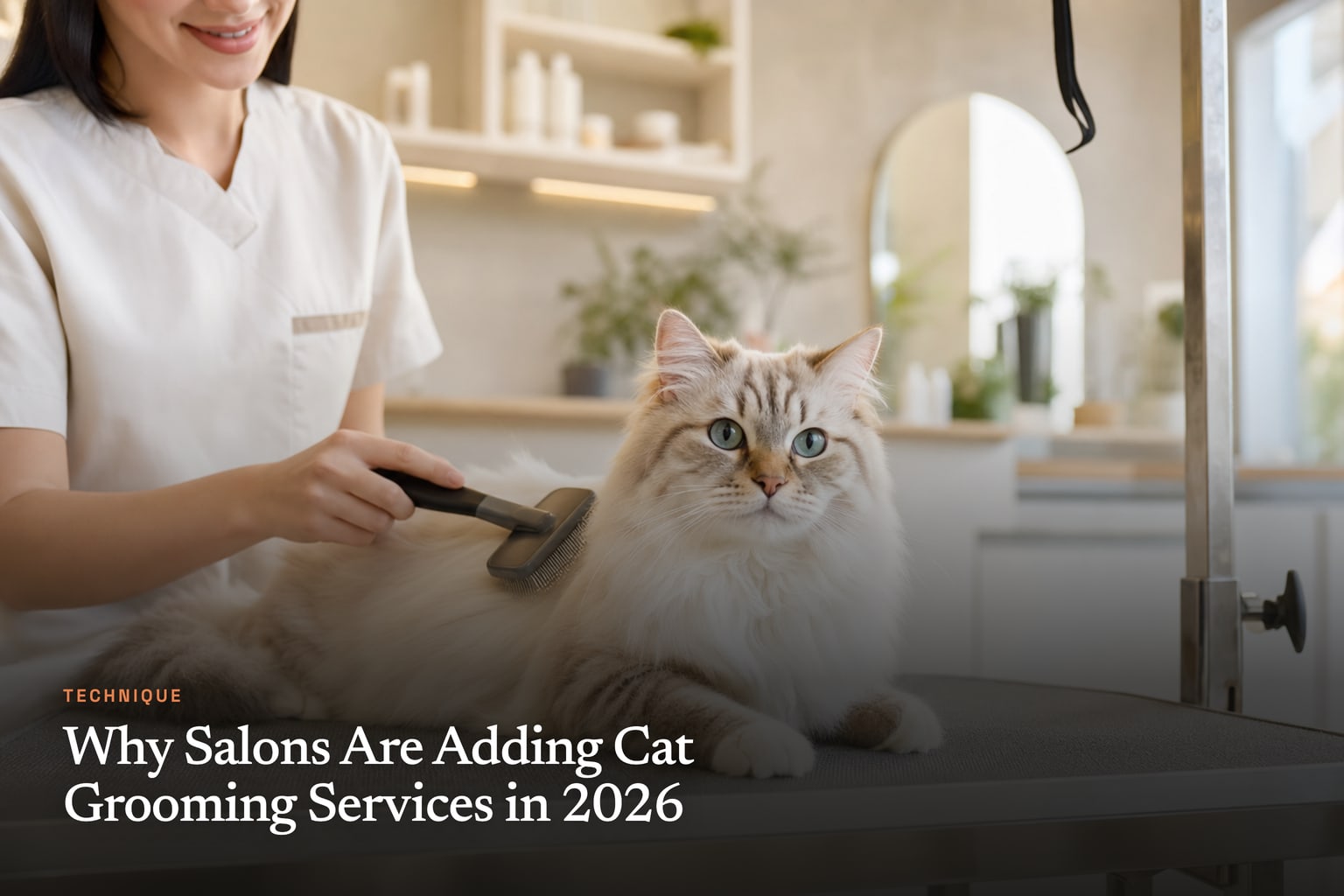
Why Salons Are Adding Cat Grooming Services in 2026
The waitlist tells the story. Groomers who offer feline appointments report booking out three to six weeks in most metro markets, a backlog that dog-only shops rarely see outside the holiday rush. Cats have long been the underserved half of the companion animal market, and salon owners are finally treating that gap as a revenue line rather than a liability.
The math is hard to ignore. The American Pet Products Association counts roughly 74 million pet cats in U.S. households, a population that rivals dogs. Yet the National Cat Groomers Institute of America, the group that runs the field's best-known credential, has certified only a few thousand groomers to date. Demand outpaces trained supply by a wide margin, and that imbalance lets certified feline specialists command premium pricing without much resistance.
The Demand Nobody Was Serving
For years the standard advice was that cats groom themselves. That advice was always incomplete. Long-haired breeds like Persians, Maine Coons, and Himalayans mat regardless of how diligently they lick. Senior cats stop grooming their hindquarters as arthritis sets in. Overweight cats simply cannot reach. Vets have been referring these cases somewhere, and increasingly that somewhere is a grooming salon rather than a clinic where sedation and higher fees are the norm.
There is also a shift in how owners think about cats. The same customers who spend on premium food and cat furniture now want their pet dematted, bathed, and given a sanitary trim on a schedule. A salon that turns them away is handing that client, and the dog they may also own, to a competitor.
Why Cat Coats Actually Mat
Understanding the coat helps a salon quote and schedule the work honestly. A cat's fur mats where there is friction and moisture: behind the ears, in the armpits, along the britches, and around the rear. Once a mat forms, the cat's own grooming makes it worse, because the rough tongue pulls loose hair into the tangle instead of clearing it. In long-haired breeds the dense undercoat felts quickly, and a cat that was fine a month ago can arrive pelted. This is why a maintenance schedule matters as much for cats as for dogs, and why the de-shedding bath earns its place on the menu as prevention, not just cleanup.
Safe Handling Comes First
None of the revenue matters if the cat gets hurt or the groomer gets bitten. Feline handling is a different discipline, not a modified version of dog work, and salon owners who treat it casually tend to abandon the service after one bad afternoon.
A few principles separate the shops that succeed:
- Work in a quiet, dog-free space. The barking, the smells, and the foot traffic of a busy dog floor push a cat into defensive mode before the first tool comes out.
- Read the body language early. Flattened ears, a lashing tail, and a low growl are warnings that most groomers learn to respect quickly.
- Keep sessions short. Efficient handlers finish a full groom in well under an hour, and they know when to stop rather than force a fight.
- Skip the heavy restraint. Scruffing and stretching are out of favor. Modern feline technique relies on low-stress positioning and reading the individual animal.
The forced-air dryer deserves special mention. Cats tolerate the noise and pressure far less than dogs, and a poorly introduced dryer can turn a calm cat into a genuine safety risk. Experienced feline groomers introduce it gradually or work around it entirely.
The Injury Risk Is Not Just Bites
A cat bite is a medical event, not a scratch to shrug off. Feline mouths carry bacteria that drive deep puncture infections, and a bite to the hand can put a groomer in urgent care on antibiotics within a day. That reality is exactly why the low-stress approach is a business necessity and not a philosophy. Every technique that keeps a cat under threshold, the quiet room, the short session, the willingness to stop, is also protecting the groomer's hands and the salon's schedule. A cat that is allowed to stay calm is a cat that does not send anyone to the doctor.
The Cuts That Sell
The lion cut is the signature feline service, and for good reason. It shears the body coat short while leaving the mane, lower legs, and tail plume intact, which solves matting on a severely tangled long-haired cat in one visit. Owners love the look, and it is the single most-requested style at most cat-friendly salons.
Beyond the lion cut, a working menu usually includes the comb cut, which takes the coat down to an even length without going as short, and the sanitary trim, which clears hair around the rear and belly for hygiene. Nail trims, ear cleaning, and de-shedding baths round out the list. The de-shedding bath in particular is an easy upsell, since a proper bath and blow-out removes far more loose coat than any at-home brushing.
Pricing reflects the specialized skill. Feline services commonly run higher than comparable dog work, and lion cuts on a matted or difficult cat can carry a hefty premium. That pricing power is exactly why the service pencils out even at lower appointment volume.
A Word on Blades and Fragile Skin
Cat skin is dramatically thinner and looser than dog skin, which changes the technical job entirely. A blade that is routine on a dog can cut a cat, and the loose skin folds and tents under the clipper in ways that catch inexperienced groomers off guard. Specialists work with a light hand, keep skin taut and flat ahead of the blade, and watch blade heat closely because a warm blade on thin skin causes burns fast. This is a core reason feline grooming is not simply dog grooming applied to a smaller animal, and it is a large part of what training and certification are meant to instill.
The Certification Path
The credential that carries weight in this field is the Certified Feline Master Groomer, or CFMG, awarded through the National Cat Groomers Institute of America. The NCGIA path runs through its feline grooming courses and a series of practical and written examinations covering handling, breed coat types, styling, and safety. It is not a weekend certificate. Groomers describe it as a serious commitment of study and hands-on testing, which is precisely what gives the CFMG its value in the eyes of clients and referring veterinarians.
For owners, the certification is both a marketing asset and a risk-management tool. A CFMG on staff signals real expertise, justifies premium rates, and demonstrates a standard of care that matters if a handling incident ever draws scrutiny. Some salons send a lead groomer through the program and build the cat service around that one specialist rather than retraining the whole floor at once.
What the Coursework Actually Covers
The value of the CFMG comes from breadth. The curriculum moves beyond cutting into the parts of feline work that catch untrained groomers, including recognizing skin conditions and parasites, understanding the coat types across breeds, safe nail and sanitary work, and, critically, the handling philosophy that keeps sessions short and low-stress. Graduates also come away understanding when a cat should not be groomed at a salon at all and belongs at a veterinary clinic instead. That judgment, knowing the edge of your competence, is part of what referring vets are trusting when they send a patient your way.
Building It Into the Business
Adding cats is not a matter of clearing a table and updating the website. The salons doing it well carve out dedicated time or space, invest in feline-specific tools and drying setups, and set clear policies on which cases they will and will not take. Aggressive or medically fragile cats often belong at a veterinary clinic, and knowing where that line sits protects both the animal and the business.
Scheduling Cats So They Do Not Collide With Dogs
The operational trick is separation. A cat booked into the middle of a loud dog rush is a cat primed to fight before it reaches the table. Shops that run both species tend to block cat appointments into quiet windows, often first thing in the morning or on a dedicated cat day, so the animal enters a calm room. Getting that separation right on a busy calendar is a real scheduling puzzle, and booking software such as Talopet helps by letting a salon tag services, reserve specific time blocks, and keep each cat's handling notes and coat history on file so the right conditions repeat every visit. The client record also flags the cats that need a vet referral, which keeps the risky cases off the table before they are ever booked.
The upside is a service with strong margins, low competition, and a steady referral pipeline from vets who need somewhere to send their long-haired and senior patients. In a market where dog grooming keeps getting more crowded, the cat on the waitlist may be the most profitable appointment a salon can book in 2026.